
Custom Large Optics.
IRD manufactures custom large optics for OEMs in the aerospace, defense, laser, semiconductor, medical, scientific, and advanced industrial markets. As a build-to-print manufacturer, we fabricate large custom optical components to your exact specifications. Whether the requirement is a large optical window, substrate, plate, disc, filter, mirror, or other precision flat optical geometry, IRD has the manufacturing capabilities to produce components that meet demanding dimensional, surface quality, and optical performance requirements.
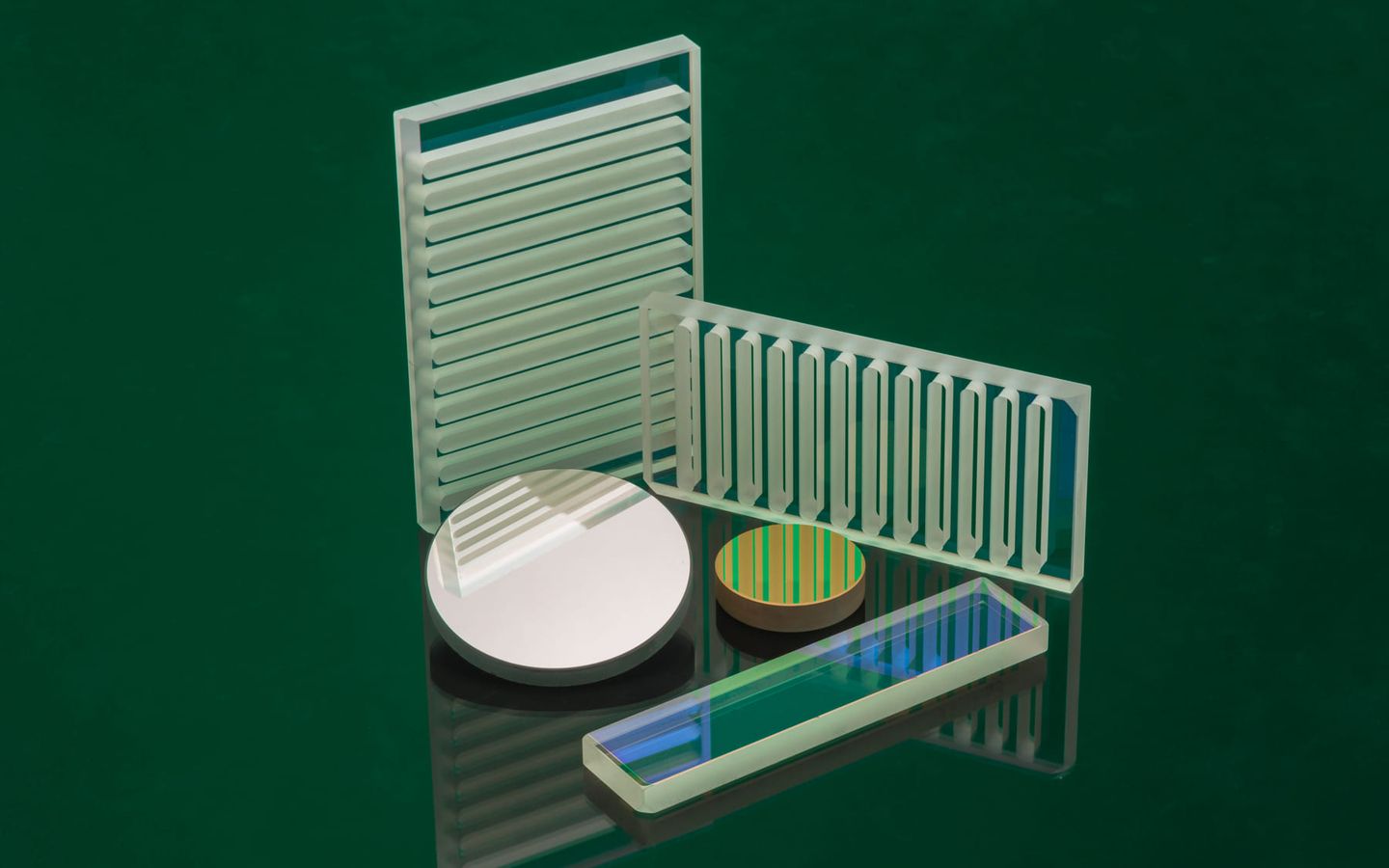
What we manufacture
Large-format work spans several component families. Each is governed by the operation that controls its critical surface, so a polished window and a waterjet-cut technical glass profile do not share one useful maximum size.
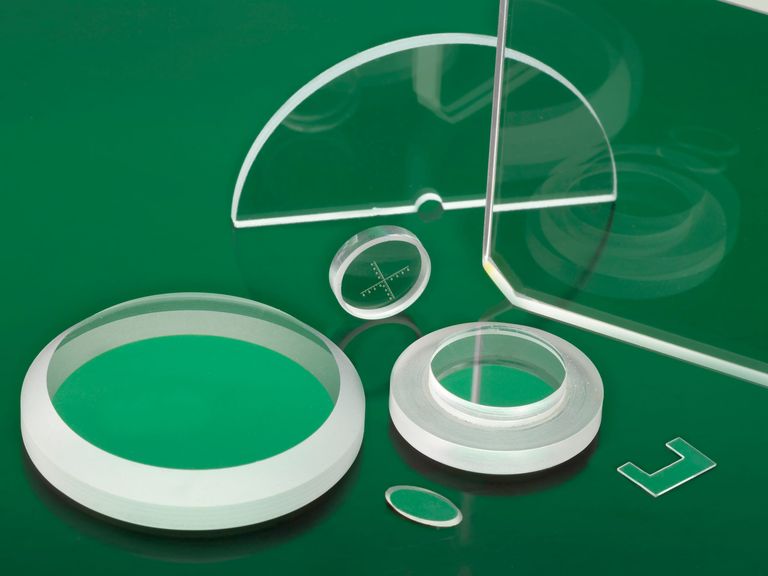
Large optical flats and windows
Round and rectangular transmissive, protective, and reference surfaces for optical systems, sensors, inspection equipment, and process environments.
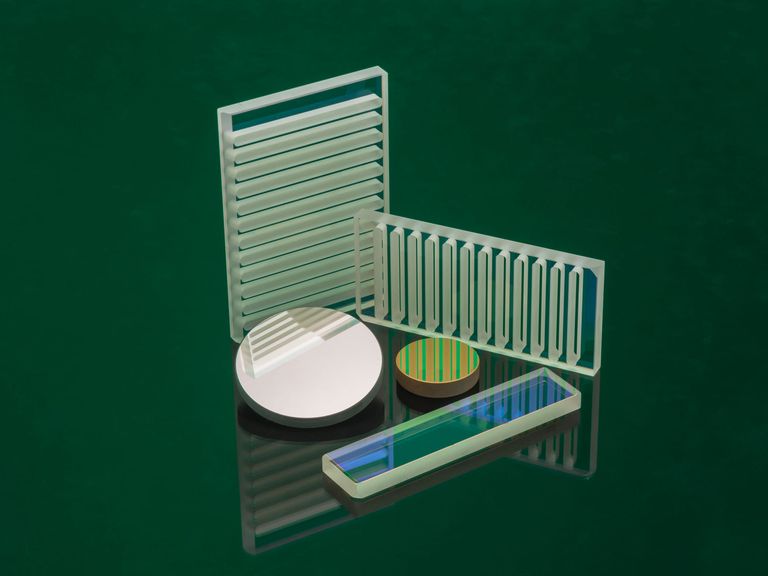
Large mirrors and laser optics
Flat or custom-outline reflective optics, including slotted geometries, with substrate, edge condition, cleaning, coating, and inspection reviewed together.
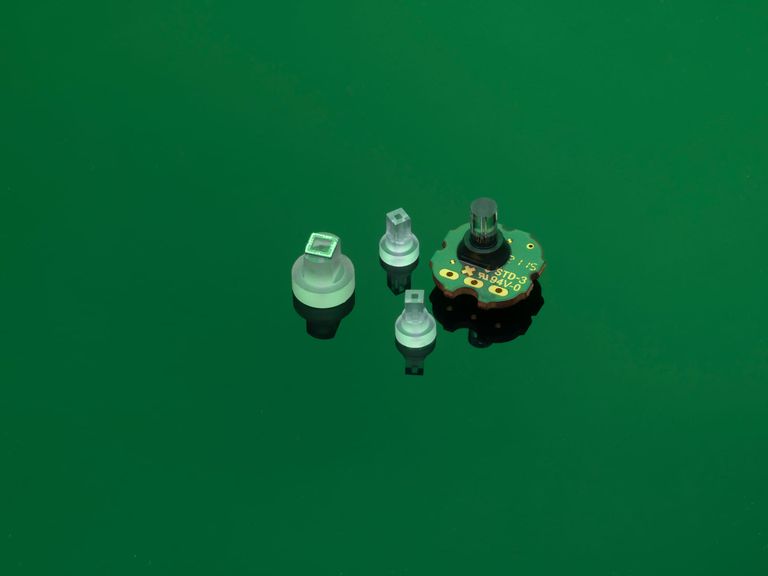
Low-expansion and technical glass
ZERODUR®, fused silica, fused quartz, and other print-defined substrates for optical, reference, metrology, and technical-glass applications.
Custom profiles and thick sections
Large parts whose controlling route may be CNC machining, grinding, sawing, waterjet blanking, lapping, or polishing.
The widest blank is not always the largest finished optic.Manufacturing limits by process
These are IRD's published capability limits across materials and geometries, not a grade every part ships to. Open the process that controls your critical surface and quote against that one.
The finished-optic size belongs to the process that controls the critical surface. Best-case figures are separate limits, not one combined 36-inch specification.
| Attribute | Typical | Best case |
|---|---|---|
| Finished-optic polishingQualified polishing envelope; material and geometry still apply | Print-defined | 36″ diameter envelope |
| Polishing equipmentPlaten diameter is not finished-part capacity | Multiple process routes | Platens to 48″ |
| Best-case optical finishIndependent limits under specific, stated measurement conditions | Quoted per print | < 1/20 wave; Ra < 2 Å |
| Best-case parallelismIndependent limit; not guaranteed at the maximum envelope | Quoted per print | < 2 arc sec |
What changes at large aperture
A large optic has to be supported, processed, measured, cleaned, and packaged without losing the surface or edge condition established in the step before it.
The print defines the route
Material, thickness, clear aperture, edge geometry, surface figure, wedge, coating, and accepted test method determine which equipment and fixturing belong in the process.
Material removal is staged
Fixed-abrasive grinding and loose-abrasive lapping remove the subsurface damage left by the preceding step before polishing begins.
Edges remain part of the optical requirement
Chamfers, slots, mounting features, and clear-aperture boundaries affect cleaning, handling, coating, and final acceptance.
Inspection conditions travel with the number
Surface figure, roughness, parallelism, and dimensional results need an aperture, wavelength where applicable, test method, support condition, and acceptance criterion.
Cleaning follows the component
Cleaning steps are selected for the material and surface. Coating requirements are routed only after the substrate and edge condition are understood.
Packaging protects the critical area
Finished optics are supported on edges or non-critical surfaces outside the clear aperture and restrained against shifting in transit.
A 50 µm edge change removed a production failure mode.
An unnamed global laser-machine OEM needed a large rectangular slotted mirror for a high-power industrial laser. Sharp slot edges generated fibers during cleaning, which could become coating defects. During DFM review, IRD recommended a 50 µm (.002″) bevel, the maximum the clear aperture allowed, and developed a component-specific cleaning route. A dedicated production cell carried the change into volume manufacturing, and cycle time fell from more than eight hours per part to less than one hour.
Talk to an applications expert- 50 µm
- Bevel at the slot edge
- >8 hr to <1 hr
- Cycle-time change
- 1 cell
- Dedicated production route
Capabilities, materials, and applications
Because every large optical component presents unique manufacturing challenges, IRD works closely with OEM engineering teams to optimize material selection, manufacturability, and production processes while maintaining the performance requirements of the finished assembly. Our large optics are used in laser systems, aerospace instrumentation, defense platforms, semiconductor equipment, scientific research, metrology, and advanced imaging systems where component size, precision, and reliability are equally critical.
Capabilities
- Large optical windows
- Large optical substrates
- Large optical plates and discs
- Large precision filters
- Large mirrors
- Large wedges
- Large custom flat optical components
- Prototype through production manufacturing
Representative capabilities
- Finished optics within a qualified 36-inch polishing envelope; larger components are reviewed by application
- Precision fabrication of fused silica, BK-7, sapphire, borosilicate, fused quartz, optical ceramics, and other specialty optical materials
- Precision grinding, lapping, polishing, and edging
- Advanced thin-film optical coatings
- Flatness, parallelism, and surface finish engineered to application requirements
- Custom fabrication from customer-supplied drawings and specifications
Materials
- UV- and IR-grade fused silica
- Fused quartz
- N-BK7
- Borofloat and B270
- ZERODUR®
- Sapphire, spinel, silicon, and other IR materials
- Filter and float glass
Components and applications
- Windows and protective optics
- Mirrors, filters, and laser optics
- Reference flats and metrology structures
- Aerospace and defense sensing
- Industrial process equipment
What to send
- Drawing or CAD file
- Overall size, thickness, and clear aperture
- Material and grade
- Surface figure, wavelength, and test method
- Roughness, surface quality, wedge, and parallelism
- Coating conditions, edge requirements, volume, and schedule
Measured on
- Zygo GPI interferometer
- Zygo NewView
- Zygo Verifire XPZ
- Nikon 6D interferometer
- Micro-Vu automated vision system
- TriOptics Triangle
- TriOptics PrismMaster
- Starrett MVR300
- Zeiss Spectrum
- Zeiss O-Inspect
- Tagarno digital microscope
Frequently asked questions
The maximum size changes with the process and the complete set of requirements.
Start a quoteWhat is IRD's largest polished optic?
IRD's qualified finished-optic polishing envelope reaches 36 inches in diameter. It is a process limit, not a fixed answer for every material or geometry.
Does a 36-inch envelope include every best-case finish?
No. Flatness below 1/20 wave, roughness below 2 Å Ra, and parallelism below 2 arc seconds are independent process limits. They are not combined guarantees on one 36-inch part.
Why does IRD list 48-inch equipment?
The 48-inch dimension describes polishing platens, not finished parts. The qualified finished-optic polishing envelope is 36 inches in diameter.
What does IRD need to quote a large optic?
Send a drawing or CAD file with material and grade, overall geometry, thickness, clear aperture, controlling tolerances, surface and coating requirements, accepted test conditions, documentation, quantity, and schedule.
Does IRD design the optic?
IRD manufactures to your design and contributes material, process, and design-for-manufacturability guidance. The optical design and final performance requirements stay with your team.
Which coatings are available?
IRD applies basic anti-reflective and metallic coatings in-house. Other requirements are handled through select, vetted coating partners. Include substrate, wavelength range, angle of incidence, polarization, clear aperture, and acceptance data in the RFQ.
Technical documents
Use these IRD references when reviewing custom large optics requirements.
What Laser Users Should Know About Fabrication of High Damage Threshold Optics
Substrate selection, staged grinding and lapping, polishing, cleaning, inspection, packaging, and the large slotted-mirror case study.
PDFWhite paperBeyond Precision: Manufacturing and Specifying Superpolished Optics
Why 2 Å-class surfaces are specialized, material-dependent endpoints and what engineers need to specify before requesting superpolish.
PDFCapabilitiesEquipment and materials
Process tables, equipment envelopes, and material options for supplier and design review.
Reference
Send us your custom large optics requirement.
When your design exceeds the capabilities of conventional optics manufacturers, IRD delivers custom large optics engineered to your exact specification. Attach the drawing and identify the controlling surface, material, overall geometry, clear aperture, coating and test conditions, quantity, and schedule. An applications engineer will review the complete manufacturing and inspection route against the print.
Final capability is quoted to the drawing. Achievable tolerance depends on material, feature size, geometry, coating, and production volume. Or call 320.693.7217 to talk through the requirement.