

Choosing a custom optical component partner is not just a sourcing decision. It affects manufacturability, inspections, repeatability, and how confidently your team can move from a print or concept to a finished part. For engineers, procurement teams, and original equipment manufacturer (OEM) buyers, knowing how to choose an optical components manufacturer helps reduce uncertainty before a request for quote. The right partner should ask practical questions to understand the application and explain technical trade-offs without unnecessary jargon.
Start With the Application
A strong manufacturer should want to understand what the component needs to do, not just what the drawing says. Dimensions and tolerances matter, but those details only become useful when they are connected to the end use.
A component used in a laser system may raise different questions than one used in a sensor. The manufacturer does not need to redesign your product, but they should connect the specifications to performance and inspection.
This is also where early requirement reviews become valuable. If a drawing is missing coating notes, inspection criteria, or material context, the manufacturer should help surface those gaps before quoting.
Before choosing a supplier, consider whether they ask about:
- Operating environment
- Optical or mechanical function
- Material requirements
- Surface finish expectations
- Coating needs
- Inspection criteria
- Prototype or production goals
- International Traffic in Arms Regulations (ITAR) considerations
That kind of early conversation helps engineering and procurement teams avoid assumptions. It also gives the manufacturer a better chance to flag questions before the part reaches production.
Review Custom Manufacturing Experience
Not every optical product manufacturer is set up for custom work. Some suppliers are better suited for catalog components. Others are built around build-to-print or build-to-spec manufacturing for applications where standard parts are not enough.
If your part has unusual geometry or specialized material requirements, custom experience matters. The same is true when optical coatings, tight tolerances, or inspection methods may affect the final component.
Look for a partner that works with precision glass components and related technical materials, including infrared (IR) materials when the application requires them.
Custom work also requires clear communication. A good manufacturer should discuss the print, clarify missing requirements, and explain where a specification may affect manufacturing risk. That helps when procurement is sourcing the part, but engineering owns the performance requirement.
Check Material and Process Fit
Material fit is one of the most important parts of sourcing optical and technical components. Glass, sapphire, ceramics, and IR materials each behave differently during machining and finishing. A manufacturer that understands those differences can help your team ask better questions earlier.
Process fit matters just as much. Precision components may require sawing, grinding, lapping, polishing, coating, waterjet work, or a combination of operations. The right sequence depends on the material, geometry, finish, and performance requirements.
A helpful manufacturer should also be able to explain trade-offs in plain language. A harder material may support durability but require more careful processing. A coating may support performance, but it can also affect handling and inspection.
A capable optical products manufacturer should be comfortable discussing details such as:
- Why one material may suit the application better than another
- How surface roughness or flatness may affect performance
- Whether a coating requirement changes the manufacturing path
- What inspection method may be needed for the final component
- Where a tolerance may create manufacturability concerns
This does not mean the supplier should promise that every requirement is achievable. In fact, careful language is usually a good sign. For custom optical components, a reliable partner should be willing to review the application before confirming feasibility.
Assess Quality and Inspection Practices
Precision supports performance only when the manufacturing process is controlled. Quality should not be treated as a final checkpoint after the part is already made. It should be built into the process through documentation, inspection, repeatability, and clear communication.
For technical buyers, quality discussions should go beyond broad claims. Ask how the manufacturer reviews requirements and inspects critical features. Also, ask how they control variation and communicate when a print needs clarification.
It is reasonable to ask about formal quality systems. For example, ISO 9001:2015 certification can indicate that a manufacturer follows a documented quality management system. If your work involves defense-sensitive requirements, ITAR-compliant positioning may also be relevant.
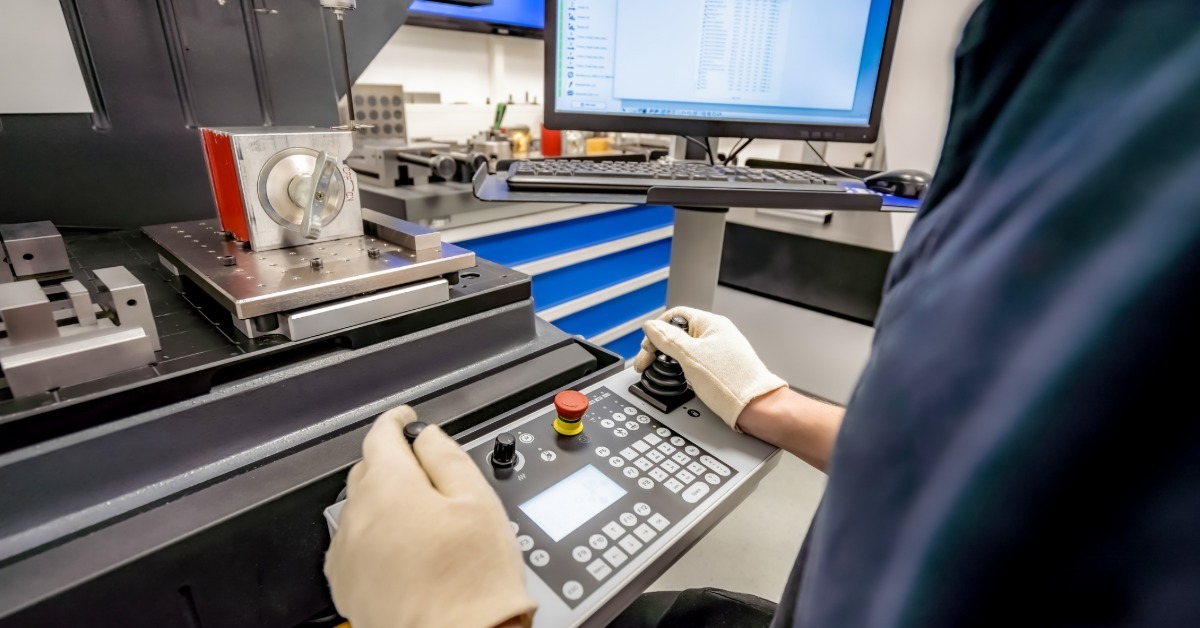
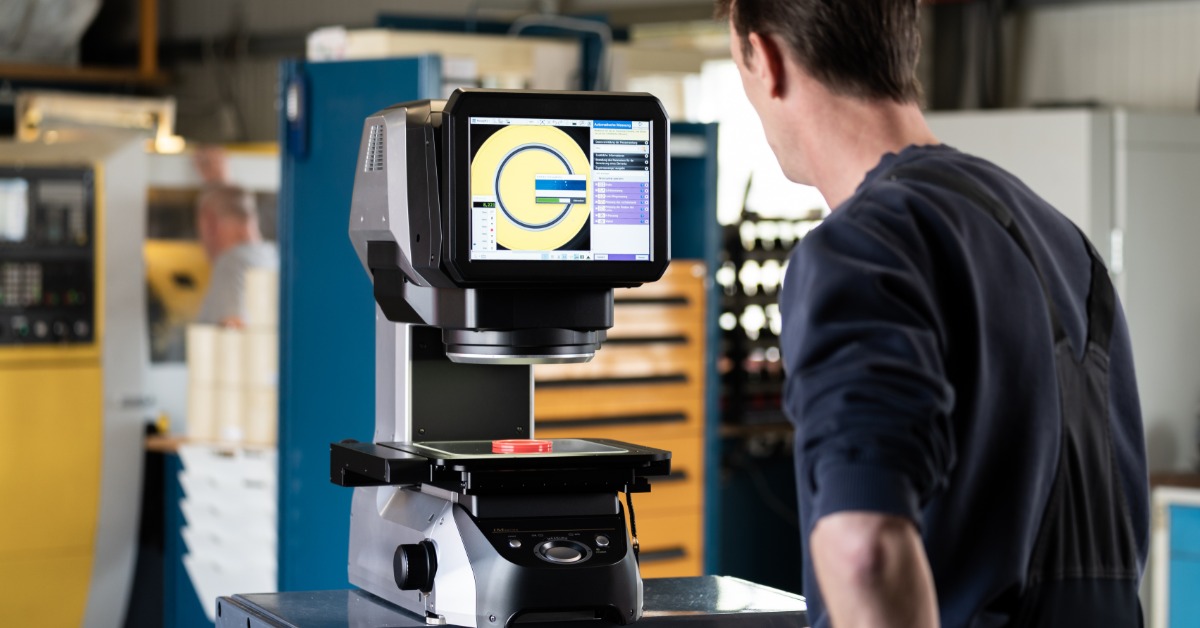
Inspections also need to match the feature being controlled. A dimensional requirement may call for a different inspection approach than a surface quality requirement. When a supplier can explain how they will verify the features that matter most, your team gets a clearer view of risk before production.
Look for Practical Technical Support
A custom component supplier should be easy to talk to before, during, and after quoting. That does not mean every answer will be instant or simple. It means the manufacturer should know which questions matter and explain them clearly.
Strong communication is especially valuable when the buyer knows the function but not every optical term. A team may understand that a part needs to transmit or reflect light. They may still need help translating that need into material, finish, coating, and inspection language.
A helpful manufacturing partner may ask for:
- A drawing or print
- Application notes
- Target performance requirements
- Material preferences
- Coating expectations
- Production goals
- Critical inspection points
- Known failure risks
This is where tone matters. A supplier that talks down to non-optics buyers can slow the process. A supplier that oversimplifies the technical side can create risk. The better fit is a manufacturer that respects both engineering detail and procurement clarity.
Compare Prototype and Production Alignment
Prototype support can be valuable, but it should not be disconnected from future production needs. A prototype may prove form, fit, or early performance. Production requires repeatability, documentation, inspections, and communication across teams.
The earlier those needs are considered, the easier it is to avoid redesign or resourcing later.
When choosing an optical components manufacturer, ask how early decisions may affect the production path. A supplier should be able to talk about what might change as a part moves from prototype to production. Some requirements may be straightforward at low volume but need tighter process control as demand grows. Inspection documentation or coating consistency may need to be discussed early so the production path is not built on incomplete expectations.
For OEM buyers, production alignment often includes:
- Repeatable manufacturing methods
- Clear quality expectations
- Practical tolerance reviews
- Consistent documentation
- Responsive technical communication
- Material and coating coordination
- Inspection planning
- Long-term supplier fit
This is also where cell-based manufacturing can be relevant. A dedicated team structure can support communication and repeatability as custom components move through multiple operations.
Choose a Partner for the Whole Project
The right supplier should understand the technical component and the application risk. They should be able to work from a print, discuss build-to-spec requirements, and help your team clarify what the part needs before manufacturing begins.
IRD Glass supports technical buyers with custom precision glass, optical, sapphire, ceramic, IR, and other super-hard material components for demanding applications. If your team is evaluating a custom optical component, contact us today to start a practical manufacturability conversation with an IRD Glass expert.