IRD GLASS
ProductsTechnical Glass Components

Technical Glass Components.

IRD manufactures ultra-precision technical glass and non-optical components for OEMs in the sensor, aerospace, defense, medical, and advanced manufacturing industries. Working from customer drawings, IRD manufactures components where dimensional accuracy, surface finish, flatness, and material stability are critical to system performance.

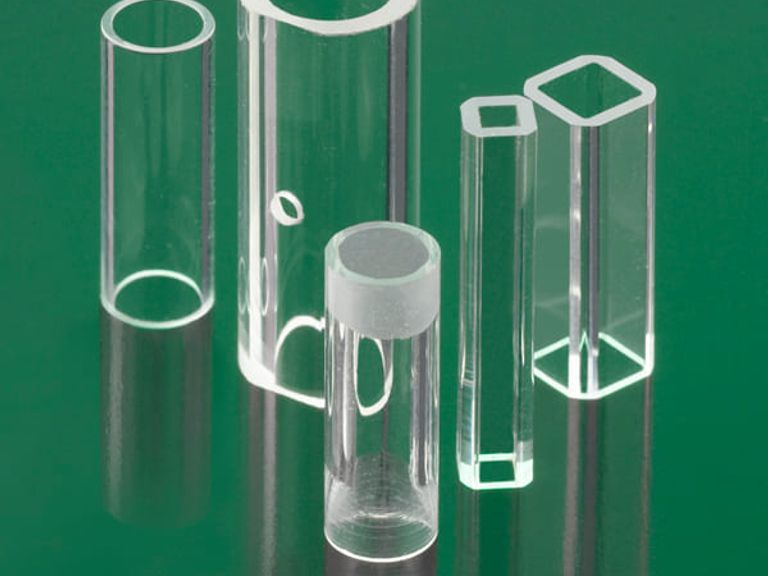
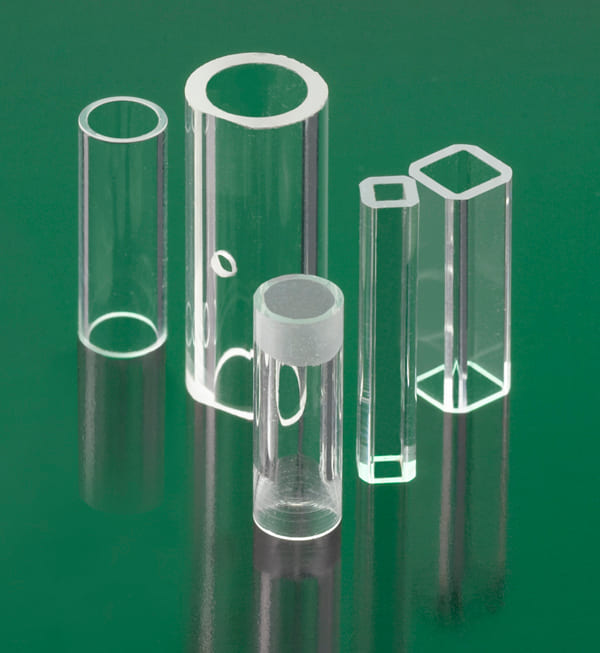
Technical glass tubes and components manufactured by IRD Glass

What we manufacture

Our components are manufactured to demanding dimensional and surface finish requirements to support applications where alignment accuracy, stability, and repeatable performance are essential. When tolerances tighten and performance margins narrow, IRD delivers technical glass components built to exact specification.

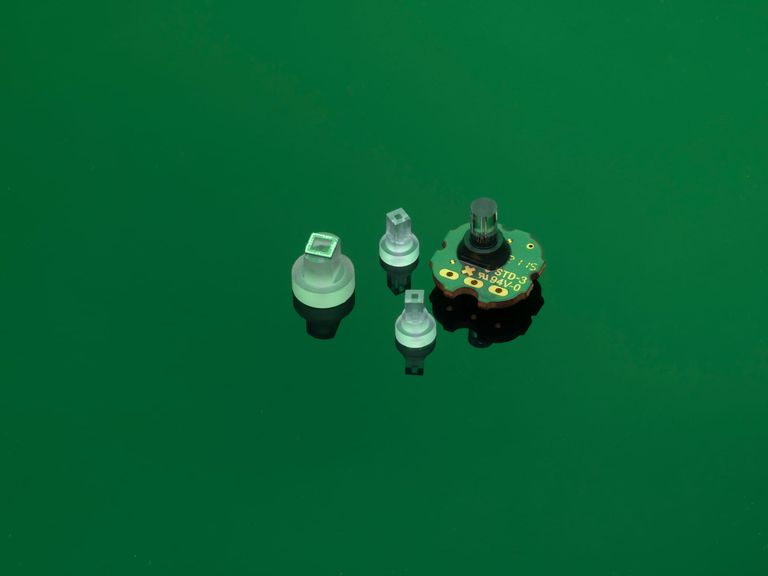
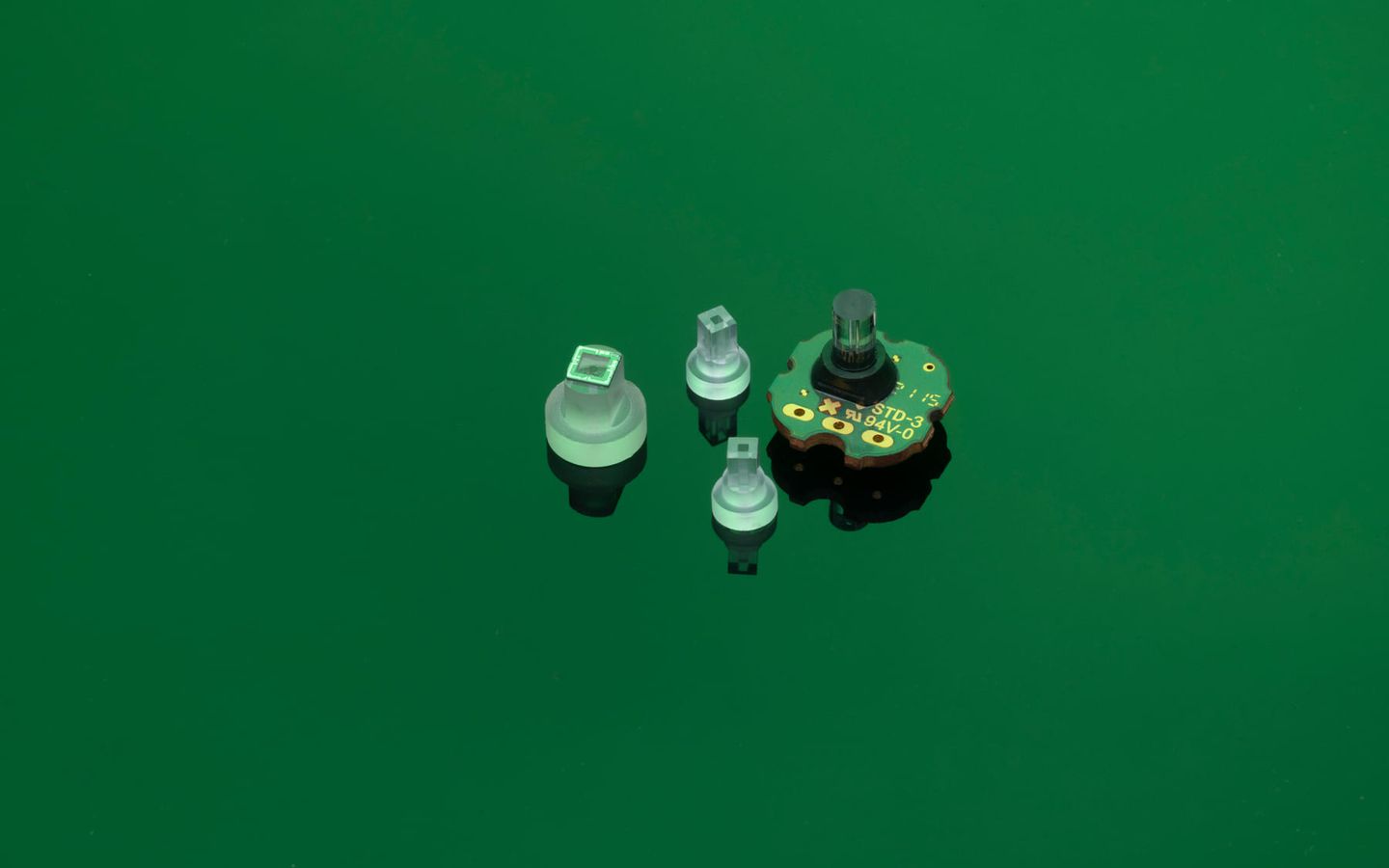
Precision glass sensor pedestals

Precision glass sensor mounts

IRD manufactures ultra-precision glass sensor mounts and pedestal components for sensing, imaging, aerospace, and industrial OEM applications. These components are engineered for applications requiring exceptional flatness, dimensional stability, and repeatable alignment performance. IRD sensor mounts are used in pressure sensing, electro-optic systems, imaging technologies, and advanced instrumentation where precision alignment and surface quality are critical. When sensor performance depends on geometric precision and repeatability, IRD delivers components manufactured to the customer drawing.

Face flatness to .000004", edge chip tolerances to .004″, production volumes in the hundreds of thousands annually
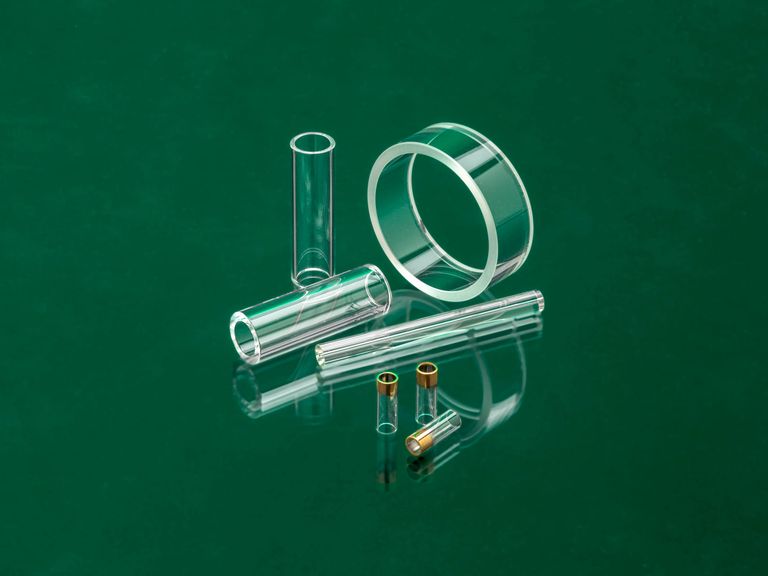
Precision technical glass tubes

Precision tubes

IRD manufactures precision glass tubes and cylindrical components for aerospace, sensing, medical, and advanced optical applications. Our tubes are engineered for dimensional precision, optical clarity, and repeatable performance in demanding environments. When applications require precision geometry, surface quality, and long-term reliability, IRD delivers tubes manufactured to the customer drawing.

End polishing to better than .000004" flatness, at volumes approaching 500,000 tubes annually
Technical glass tubes and components manufactured by IRD Glass

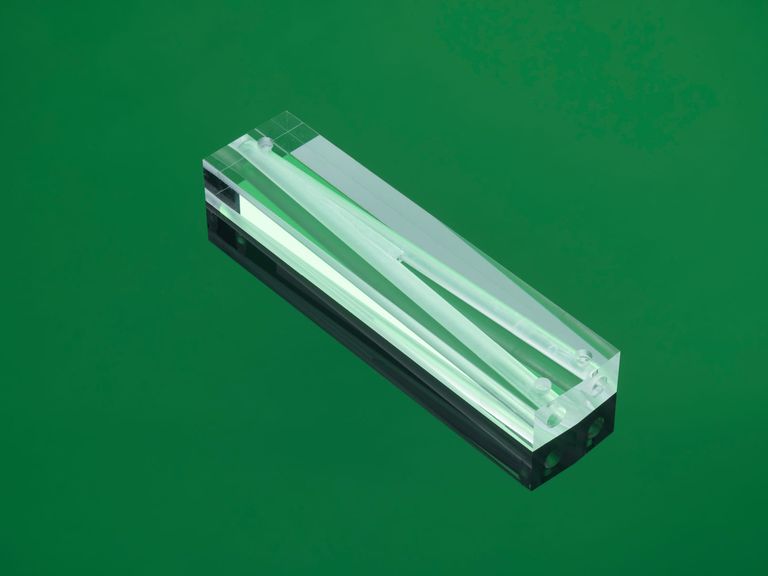
Gyro blocks

IRD manufactures precision ring laser gyro blocks and technical glass components for aerospace, defense, and navigation systems. Our gyro components are engineered for dimensional stability, thermal performance, and reliability in demanding operating environments.

Navigation, guidance, and inertial sensing systems
Precision glass flow tube

Tools and fixturing

IRD manufactures precision tooling, fixturing, spacers, masks, wedges, seals, and technical glass components for OEM manufacturing environments. Working from customer drawings, IRD manufactures tooling components for dimensional stability, wear resistance, chemical or electrical isolation, and repeatable manufacturing performance.

Components from miniature geometries to parts exceeding 8″
Process capability

Manufacturing limits by process

These are IRD's published capability limits across materials and geometries, not a grade every part ships to. Open the process that controls your critical surface and quote against that one.

Swiss turning and CNC machining, precision grinding, sawing, dicing, and waterjet machining, and advanced lapping and optical polishing of glass, sapphire, and ceramic materials, from prototype through full production.

AttributeTypicalBest case
Dimensional toleranceSwiss turning, CNC machining, and grindingPrint-defined±.0002″
Face flatnessSensor mounts and polished tube endsPrint-defined.000004″
Edge chipHigh-volume sensor mount productionControlled.004″
Surface finishOptically polished facesRa < 1 µinRa < 2 Å
FlatnessLapped and polished faces1 wave< 1/20 wave
ParallelismTubes, spacers, and reference faces30 arc sec< 2 arc sec
Maximum polished diameterLarge polished componentsPrint-defined35″
Waterjet machiningLarge profiles and shapes a saw cannot takePrint-defined40″ × 24″ × 2″
Production scaleSensor mounts run in the hundreds of thousands annuallyPrototype to volume~500,000 tubes / year
Process control

Holding geometry at production volume

A flatness figure in the millionths only means something if it survives volume. These are the controls that let IRD hold sensor-grade geometry at production quantities.

  1. Five fire polishers in the published equipment list

    Fire polishing finishes the faces the assembly seats on

    Precision tubes are held to precision length tolerances, end polished to better than .000004″ flatness, fire polished, and held to tight scratch and dig specifications, with precision control of inner and outer diameters. IRD precision tubes are used in air speed indicators, altimeters, medical devices, pressure sensing technologies, and optical and analytical instrumentation.

  2. Automated optical inspection was built for glass, not bought for it

    Computer vision systems have historically struggled with glass, because the system has to decide whether a defect sits on the front or back plane, cope with the radius distorting apparent defect size, handle reflection, and do it without scratching the part. IRD's system picks individual tubes from a stack, inspects sixteen discrete criteria on both ends and the entire circumference, and packages them, at under seven seconds per part. It has been in production since 2017.

    Most automation shops turned the project down before one took it on
Precision glass flow tube
  1. The cutting route is chosen by geometry, not by habit

    Swiss turning machines, CNC mills, saws, dicing machines, and waterjets each cover geometry the others cannot. Choosing the route at design review is what keeps dimensional tolerance and edge condition from fighting each other later.

  2. Metallization and coating are planned into the route

    Custom-designed thin-film metallization is applied to tubes and other technical glass where the assembly requires it, and the material and coating are matched to the thermal expansion and durability requirements of the application rather than added at the end.

Case study: arc-second parallelism on large glass tubes

Both the outer and the inner diameter had to hold arc-second parallelism.

A global laser and sensor OEM needed a glass component manufacturer that could control parallelism to the arc-second quality level on both the outer and the inner diameter of large glass tubes, while holding a surface quality good enough that the transmitted laser spot size was not affected. IRD ran detailed consultations to understand how the component was used and what the customer expected of it, developed custom machinery and dedicated floor space to the project, and put the process controls inside the manufacturing cell so every specification was met on every part rather than sorted for at the end. The result was a twenty-year relationship, multiple supplier-of-the-year awards, and sole-source status that held until the customer's laser system was obsoleted by newer technology.

Talk to an applications expert
Precision glass flow tube
20 years
Relationship with the customer, ending only when the laser system was obsoleted
Arc-second
Parallelism controlled on both the OD and the ID of the tube
Sole source
For the component, with multiple supplier-of-the-year awards
Capabilities

Capabilities, materials, and coatings

IRD supports customers from early-stage development through full production, delivering precision components engineered for reliability in critical environments.

Components

  • Pedestal mounts for sensor systems
  • Precision tubes and cylindrical components
  • Ring laser gyro blocks for aerospace and defense applications
  • Precision tooling and fixturing
  • Custom non-optical glass and ceramic components manufactured to specification

Manufacturing capabilities

  • Swiss turning and CNC machining
  • Precision grinding, sawing, dicing, and waterjet machining
  • Advanced lapping and optical polishing
  • Precision fabrication of glass, sapphire, and ceramic materials
  • Prototype through full production manufacturing

Representative capabilities

  • Dimensional tolerances to ±0.0002"
  • Surface finishes better than Ra < 2 Å
  • Flatness better than 1/20 wave at best on qualified sizes and geometries
  • Parallelism better than 5 arc sec
  • Maximum polished diameters up to 35"
  • Waterjet machining up to 40" × 24" × 2"

Precision glass sensor mounts

  • Face flatness to .000004"
  • Edge chip tolerances to .004"
  • Tight dimensional and parallelism control
  • Precision grinding, lapping, and polishing
  • Production volumes in the hundreds of thousands annually

Precision tubes

  • Precision length tolerances
  • End polishing to better than .000004" flatness
  • Tight scratch and dig specifications
  • Fire-polished surfaces
  • Precision control of inner and outer diameters
  • High-volume manufacturing approaching 500,000 tubes annually

Precision tube applications

  • Air speed indicators
  • Altimeters
  • Medical devices
  • Pressure sensing technologies
  • Optical and analytical instrumentation

Materials and coatings

  • Advanced optical glass
  • Sapphire and fused silica
  • Technical ceramics and specialty materials
  • Thin-film optical coatings
  • Thin-film metallization on tubes and components
  • AR and HR coatings
  • Hydrophilic and hydrophobic coatings
  • Chemical and heat strengthening

Measured on

  • Zygo GPI interferometer
  • Zygo NewView
  • Zygo Verifire XPZ
  • Nikon 6D interferometer
  • Micro-Vu automated vision system
  • TriOptics Triangle
  • TriOptics PrismMaster
  • Starrett MVR300
  • Zeiss Spectrum
  • Zeiss O-Inspect
  • Tagarno digital microscope
FAQ

Frequently asked questions

The answers an applications engineer would give you on the first call.

Start a quote
Are those flatness figures first-article numbers?

No. IRD's published .000004″ face flatness on precision glass sensor mounts is held in production quantities in the hundreds of thousands annually. The .004″ edge-chip tolerance is published alongside it, on a seated part, chip control is usually what makes the component usable, not flatness alone.

What volumes can this run at?

Precision tubes are manufactured in volumes approaching half a million per year, and sensor pedestals run in the hundreds of thousands. Achievable volume is process- and geometry-dependent, so bring the annual quantity into the first conversation rather than after the prototype.

What do you need in order to quote?

IRD's quoting checklist: application, product type, volume potential and schedule, material, dimensions, surface quality, coatings, assembly, cleaning, and packaging. Attach the drawing. For a new design the technical team runs a no-cost Design for Manufacturability review before quoting, then estimates prototype and production volumes separately.

Does IRD design the part?

No. IRD manufactures to your print or performance requirement and contributes material, process, and manufacturability input, the design stays with your team. When a print calls for tighter tolerances than the application requires, IRD will flag the potential over-specification, since it can add unnecessary cost. Final optical design decisions remain yours.

How large a part can you make?

Machining runs to 30″ × 16″ × 16″, polishing to 36″ diameter, grinding to 24″ diameter at 6″ height, lapping to 13.3″ diameter, waterjet to 40″ × 24″ × 2″, and dicing to 8″ diameter at .300″ thick. Larger geometry is quoted against whichever process controls the critical surface.

Which coatings are applied in-house?

IRD applies basic anti-reflective and metallic coatings in-house for quick turnaround. Other coating requirements are handled through select, vetted coating partners. Name the coating target in the RFQ and the team will confirm the route before quoting.

Can you take ITAR-controlled work?

IRD is registered with the Directorate of Defense Trade Controls, and controlled programs are manufactured and stored domestically across the Litchfield and Alexandria, Minnesota facilities. Both plants operate under quality systems certified to ISO 9001:2015 and ISO 13485:2016 for ultra-high-precision glass, optical, and ceramic components.

How is the finished part protected in transit?

Packaging is tailored to the part and can include multi-layer foam, custom corrugated packaging, gel packs for sensitive optics, and military-grade cases. Components are supported on edges or non-critical surfaces outside the clear aperture and held against shifting in transit.

Precision glass sensor pedestals
Start with the print

Send us your technical glass components requirement.

Send the print with the controlling face, edge, or bore identified, the flatness and chip tolerances, end condition, length tolerance, any metallization or coating, annual volume, and the inspection evidence that has to travel with the parts. For a new design, the technical team runs a no-cost Design for Manufacturability review before quoting, then estimates prototype and production volumes separately.

Final capability is quoted to the drawing. Achievable tolerance depends on material, feature size, geometry, coating, and production volume. Or call 320.693.7217. If the program needs per-piece inspection evidence at volume, say so, that decides the inspection route, not the machining one.
Technical Glass Components | IRD Glass